
The History of Indian Colors and
Fabrics: A Deep Dive for Design Students
Introduction:
India—The World’s Original ‘Color Palette’
Have you ever wondered if India hadn’t gifted Indigo (Neel) to the world, would everyone be
wearing dull, boring grey clothes today? It might sound strange, but the truth is, India has
always been the one filling the global fashion “Color Box.”
Long before the world knew anything about “chemical dyes,” our local artisans were
extracting colors from soil, flowers, and herbs –colors so strong they wouldn’t fade for
decades. From the royal shimmer of silk to the breathability of cotton, our textile history is
nothing short of magic. For creative minds prepping for NIFT or NID, design isn’t just about
sketching; it’s about bringing this centuries-old legacy to life in a modern way.
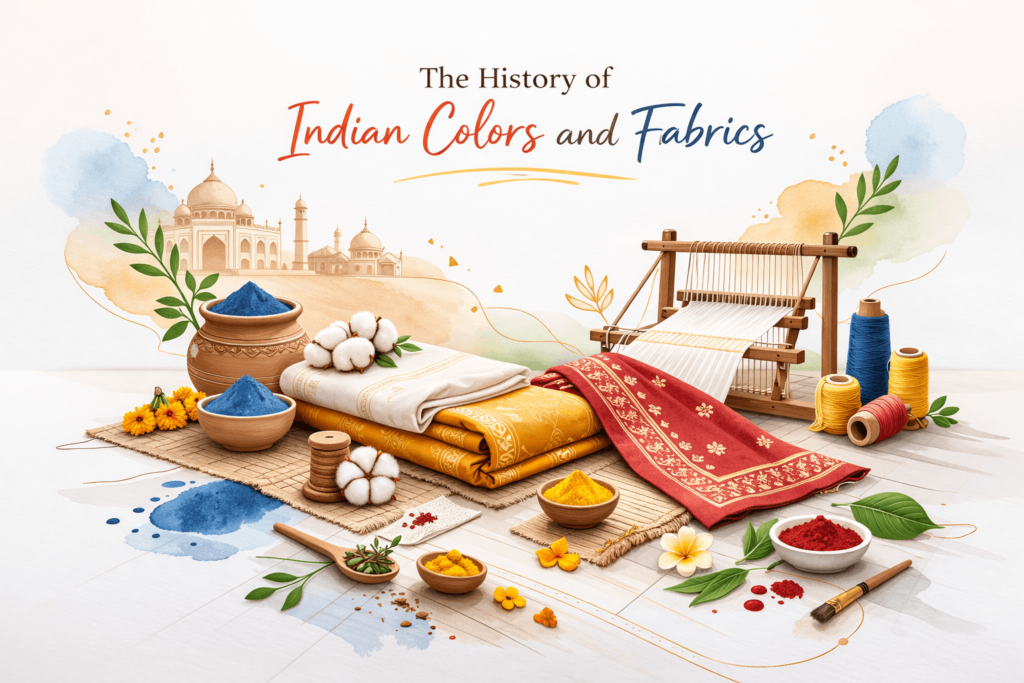
The Story of Colors: When India Painted the World
Our colors aren’t just pretty to look at; they carry a massive history behind them:
- The Power of Blue (Indigo): The name ‘Indigo’ literally comes from the word India. We
taught the world how to extract that deep, mysterious blue from a plant. Even the DNA of
your favorite blue jeans today traces back to those Indian fields! - The Everlasting Red (Madder Red): Excavations from 5,000 years ago found red cloth
fragments that still haven’t lost their spark. Our ancestors knew the secret of “locking” color
into fabric forever. - Haldi and Saffron: These aren’t just kitchen ingredients; they are the pride of our textiles.
These shades represent our soil, our spirituality, and our cultural identity.
Fabrics That Win Hearts: India’s ‘Secret’ Touch
In India, fabric wasn’t just something to cover the body; it was an “Experience.” Here’s what
makes our textiles impossible to beat:
- The Matchbox Saree: Our ‘Dhaka Muslin’ was so fine that a full 6 yard saree could fit
inside a tiny matchbox. The British were stunned how could human hands weave something
so thin without machines? They called it “Woven Air.” It felt like wearing a breeze! - The ‘Royal Gold’ Silk (Muga & Tussar): Ever noticed why Indian silk has that unique,
“royal” glow? Our ‘Wild Silk’ (like Muga from Assam) is naturally goldenish. Its fibers are
‘Triangular’ in shape, acting like a prism that reflects light. This is why when you dye it, the
result is a rich, royal look that no other silk in the world can replicate. - The ‘Copy Paste’ Impossible: Did you know that in the 17th and 18th centuries, Indian
Chintz (hand printed cotton) became such a craze in Europe that it started a “fashion war”?
It was so soft, colorful, and wash-resistant that French and British wool merchants felt
threatened. To save their own businesses, the British Parliament actually banned the
wearing and selling of Indian Chintz! This “Chintz Craze” proves that Indian artisans had
mastered the art of “permanent color” centuries before modern chemistry even existed.
Why Does This Matter for Design Aspirants?
Entrance exams for NIFT or NID aren’t just about your drawing skills. Examiners want to see
how well you understand your roots.
- Understand the Logic: When you can explain the story behind an ancient print (like
Ajrakh), your value as a designer goes up instantly. - Climate Friendly Design: Our fabrics have always been “smart” by being cool in
summers and warm in winters. That is the ultimate example of real Design Thinking. - Old is Gold: The real talent of a modern designer lies in using these ancient techniques
to create something fresh and trendy for today’s world.
Conclusion
Indian fabrics and colors are more than just fashion; they are the scent of our soil. Whether
it’s the glow of silk or the comfort of cotton, our history is a textbook for every student. If you
want to do something truly “Original” in your career, understanding these roots is your very
first step.
A Quick Question for You:
Today, everything is about “Fast Fashion” and cheap chemical dyes. Do you think we can
save our 5,000 year old natural dyeing secrets, or will they be lost to machines?
Share your thoughts in the comments below!
Reference list:
- The Indian Origin of Indigo:
https://www.aljazeera.com/features/2020/12/13/indigo-and-the-story-of-indias-blue-gold - The Legend of Dhaka Muslin:
https://www.bbc.com/future/article/20210316-the-legendary-fabric-that-no-one-knows-how-to
-make - The Golden Glow: why muga silk is India’s ‘royal treasure:
https://en.wikipedia.org/wiki/Muga_silk - Assam Government: Muga Silk GI Status:
https://www.pib.gov.in/Pressreleaseshare.aspx?PRID=1594198®=3&lang=2 - The 5000 year old secret: The science of ‘everlasting’ madder red
https://www.google.com/search?q=https://www.vam.ac.uk/articles/the-fabric-of-india-chintz&
hl=en-IN - Global fashion war: when Inians ‘Chintz’ was banned in Europe:
https://www.google.com/search?q=https://www.vam.ac.uk/articles/the-fabric-of-india-chintz&
hl=en-IN - The Fascinating History Behind the Blue Color of Jeans
https://www.zevadenim.com/the-fascinating-history-behind-the-blue-color-of-jeans/