
DESIGN AS PROBLEM SOLVING IN EVERYDAY LIFE
Design is not something we always notice — it’s something we feel.
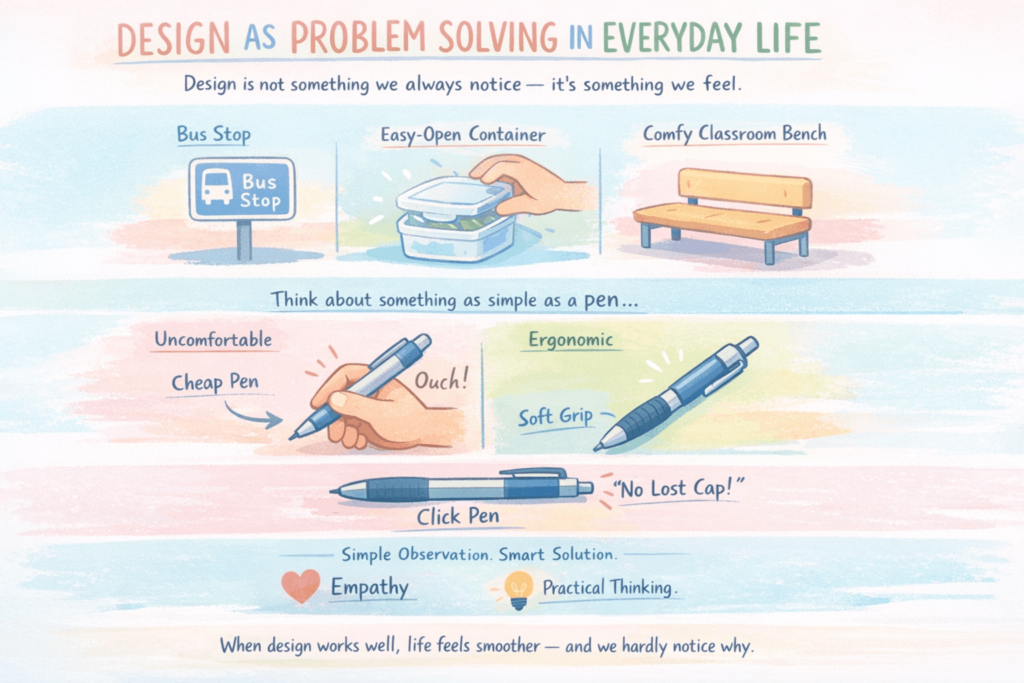
It’s the bus stop sign that helps you find the right route without asking anyone. The kitchen
container that opens easily even when your hands are wet. The classroom bench that
doesn’t make your back hurt after sitting for an hour. These small details quietly shape our
everyday experience.
Think about something as simple as a pen.
A cheap plastic pen without a grip may write well, but after a few minutes, your fingers start
to hurt. Now compare it with a pen that has a soft rubber grip. You can write for longer
without discomfort. That small change is called ergonomic design design made for real
human use.
Another common problem was pen caps getting lost. Designers observed this and
introduced pens with a click button on top, keeping the ink safe inside and removing the
need for a cap altogether. Simple observation. Smart solution.
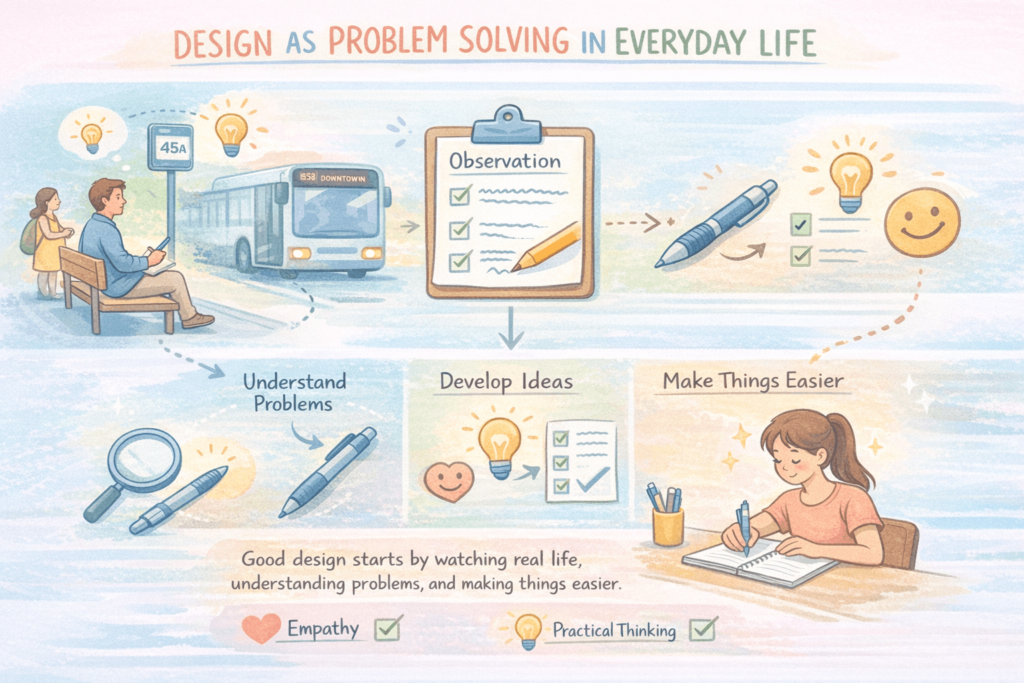
This is how good design works. It starts by watching real life, understanding problems, and
making things easier. Colors and shapes are just tools. The real power of design lies in
empathy and practical thinking.
When design works well, life feels smoother and we hardly notice why. That’s the true power
of design as problem solving.